
The Harvest
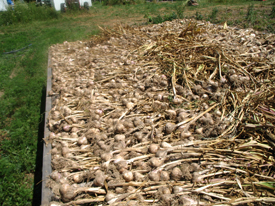
Softnecks tend to be mature a week earlier than hardnecks. Harvest time for softnecks is when you notice that some of them have fallen over and are laying on the ground. During the last week of June begin pulling a couple of hardnecks every few days and cutting a cross section of the head (bulb). Look at the cross section and once you see space forming between the cloves and the central stem, the the garlic is ready for harvest.
Dig the garlic with a fork or shovel. It is OK to leave it lying on the ground for a day or two to dry unless the temperature is above 90 degrees F (you don’t want to cook it). Pick up the garlic and shake off the soil. The garlic will need to dry for a couple of weeks (or eaten at any time). To dry the garlic, place it in an area where there is plenty of air movement around the stems and heads. We use fans on ours, and we try to maintain a temperature of about 100 degrees F. High tunnels work really well for this. Just remember to monitor the temperature carefully, as you do not want to exceed 120 degrees F.
Preserving and Storing
There are many different ways to preserve your garlic. Cut it up and put it in the freezer for later use. Dehydrate and put through a coffee grinder to make powder. Keep loose in a bowl in a cool dark cupboard. Place in a brown paper bag and put into the crisper of your refrigerator – this method has been working very well for people and allows for you to buy, store and eat fresh garlic for the whole year. Braid it and hang it in the kitchen. Don’t forget to pickle a little bit while you are at it. Storing garlic in oil in the refrigerator is not recommended as botulism can form. Storing very large amounts of garlic is best at about 32 degrees F and a humidity level of about 65%. Additionally smaller heads store better than larger ones.
If you are interested in growing garlic on more of a commercial scale feel free to call to discuss other options for growing and harvesting larger quantities. I also can provide a 3+ hour consultation for a small fee (usually during the winter months when things are slower on the farm).